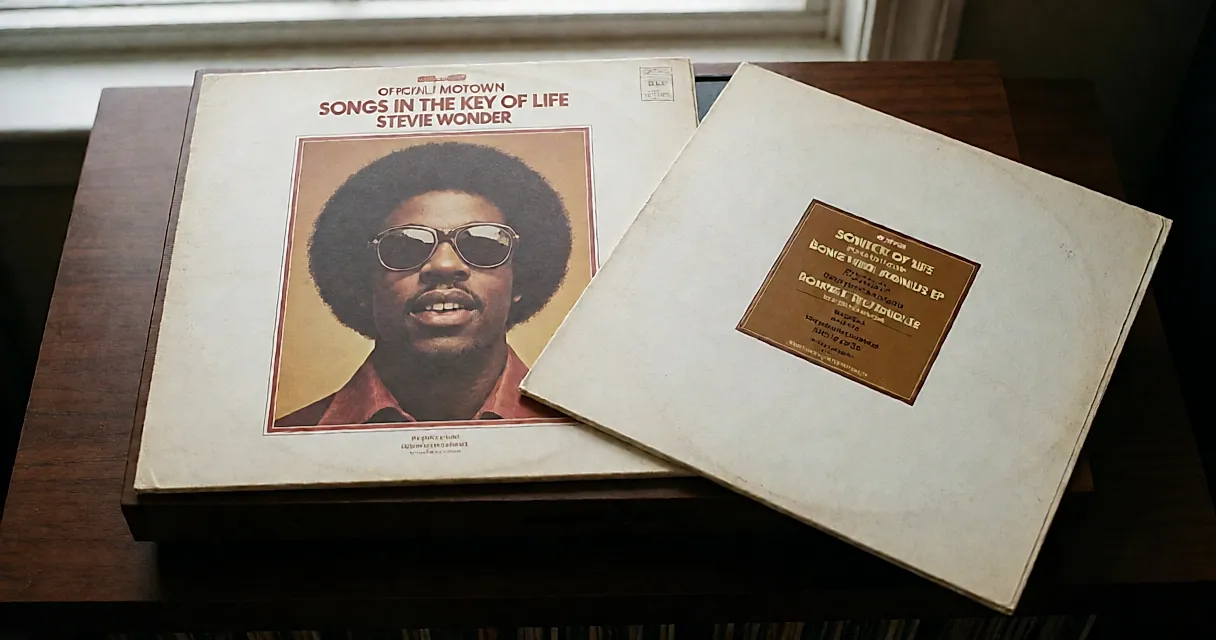
In September 1976, Songs in the Key of Life didn't arrive like a record at all. It arrived like a box you upend onto the table: a double LP, a four-track seven-inch wedged inside the gatefold, a booklet of lyrics and drawings. Fifty years on, nobody needs to ask whether it holds up. It does. The question is what a possible refresh of the mix would do by meddling with a balance that generations of ears have learned by heart.
Two jobs, routinely confused
Start with the vocabulary, because it decides everything else. Remastering means going back to the master tape — the stereo mix signed off in 1976 — and making a new transfer, with fresh equalisation, levels and noise treatment. Remixing means opening the multitracks and redrawing the balance between bass, drums, voice and brass. The first restores a decision. The second rewrites it. On an album whose very balance became a benchmark, that is not a technical distinction but an editorial one. A press release promising a “refreshed sound” without saying which of the two jobs is under way tells you nothing useful. So: remaster or remix?

And here the balance is tight. The sessions pile strings, brass, choirs, keyboards and several layers of voice onto arrangements that leave almost no blank space. Nudge the top end up to slim down the mass and the brass step forward while the bass slips back. The record can move without a single note changing. Which raises a very concrete first question: which tape is the starting point? The original master, a safety copy, a 1980s digital transfer? Everything else depends on the answer, and it is rarely printed large on the sleeve.
The 1976 mix is an awkward benchmark
That benchmark needs placing. Stevie Wonder wasn't recording just anywhere: he worked at home, at Wonderland, the studio he had built for himself in Los Angeles, and the sessions for this record ran for close to two years. Around him was a core that reappears from track to track — Raymond Pounds on drums, Ben Bridges on guitar, Greg Phillinganes on keyboards, Eddie “Bongo” Brown on percussion — plus, depending on the song, guest players whom the credits list without any visible hierarchy. It is that continuity in the rhythm section that holds the double album together despite its apparent sprawl.
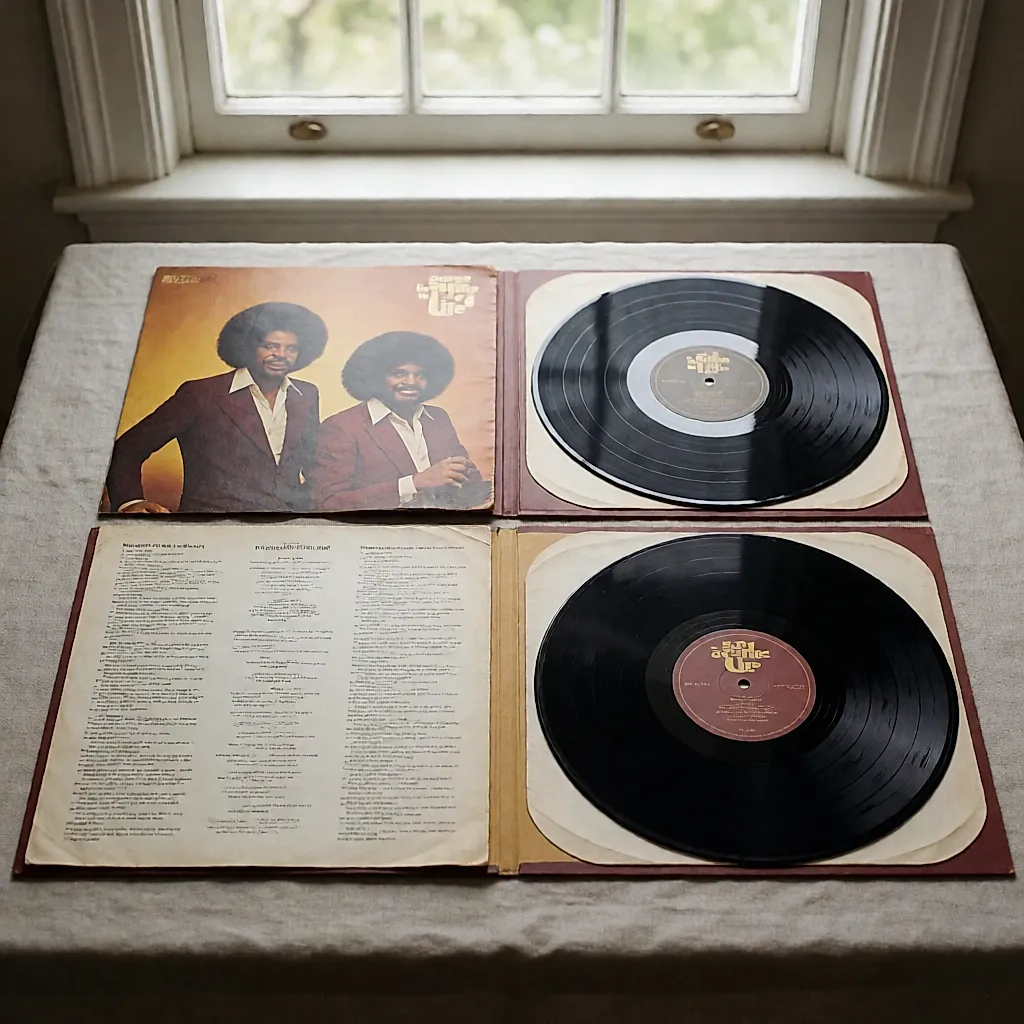
What follows is a matter of dosage. “Isn't She Lovely” opens on his daughter's voice. “If It's Magic” hangs on a harp and almost nothing else. “Sir Duke” unfurls a fanfare of harmonies in tribute to Duke Ellington, who died in May 1974. Between those extremes the mix has to find room for massed choirs — among them the West Angeles Church of God in Christ Mass Choir, with George Benson credited on backing vocals — discreet strings and a voice that is forever doubled. That is work of balance, not of power.
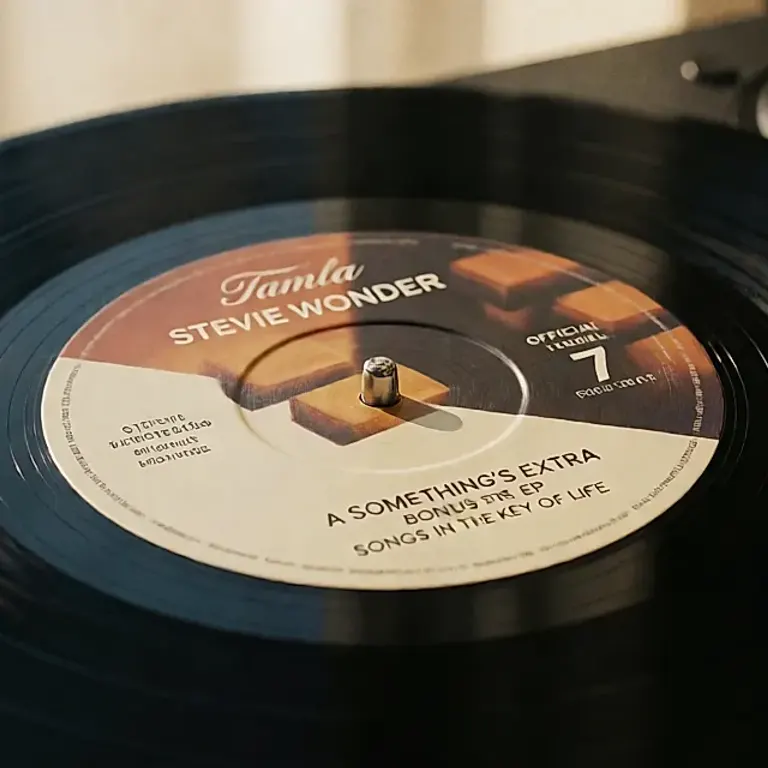
And the object itself counts. The four-track disc that came with the album is no mere bonus: it is an EP — “Saturn”, “Ebony Eyes”, “All Day Sucker” and “Easy Goin' Evening (My Mama's Call)” — sold as part of the package. Drop that disc, or fold it into the running order, and you tell a different story from the one the oddity of the original assembly tells.
What “better” can damage
There is a familiar trap here, and it isn't peculiar to this record: more definition, less contrast. A 21-track album lives on its gaps — a dancefloor cut straight after a lullaby, a bare voice after a wall of strings. Push everything up to the same level so it sounds “modern” on a phone speaker, and the sequence loses its breathing. Broadband compression helps that along without announcing itself: it makes everything audible and nothing surprising.
The second thing to watch is physical. In 1976 the running time of a vinyl side dictated the breaks, and those breaks became part of the drama: you turned the record over and the air changed. Digital removed the constraint, not the question. Would the four sides survive, or would the tracks be lined up in one continuous flow? And would the companion disc still be there, credited as such? Say it plainly: the 1976 mix is not an accident waiting to be fixed. It is a signed decision, taken by an artist producing himself, surrounded by a stable team. An honest refresh is judged on what it leaves intact, not on what it adds.
A remaster is not a remix. With the first, you hear the same balance between instruments, transferred and equalised with different tools. With the second, someone has replayed the balance: the bass can come down, the choirs go up, a reverb appear. Both approaches are legitimate — but they are not the same record. When a refresh doesn't say which one it has chosen, that is a question worth putting to the label before you buy.
Three checks before you trust the package
The first is a single line of credits: who signed off the transfer, and in which studio. On serious reissues those names appear, and they let you cross-check against the label's technical documentation. Without them, you are buying a logo.
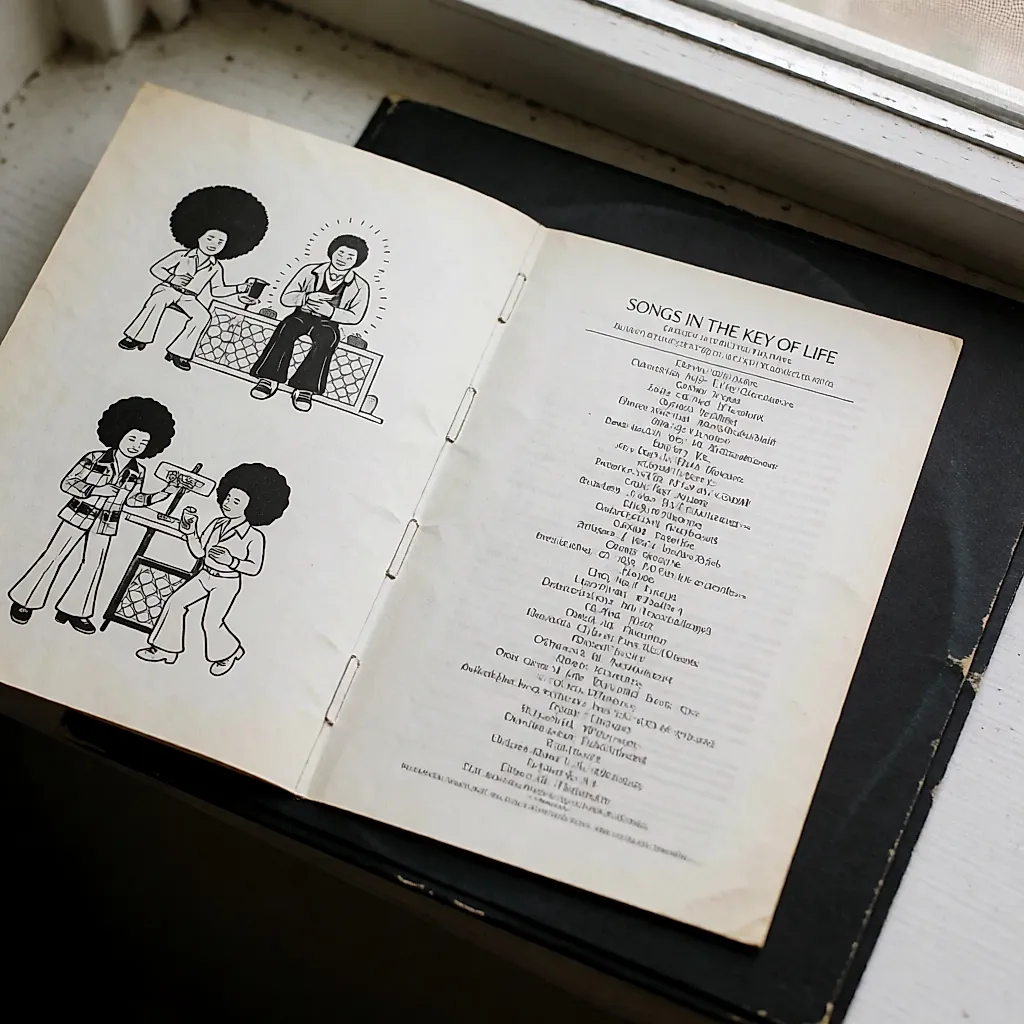
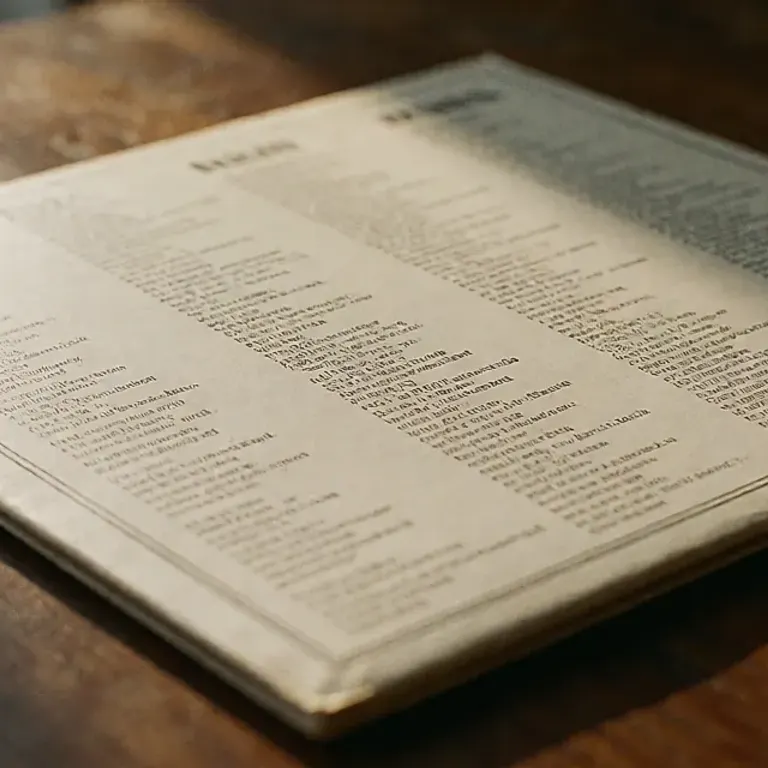
The second concerns the booklet. The original — lyrics, drawings, introductory notes — was as much part of the record as the grooves, and it is also the first thing to disappear from second-hand copies. Whether it is reproduced in full says a great deal about the care taken over the whole thing.
The third is the four-track companion. “Saturn” remains one of the strangest pieces in Stevie Wonder's catalogue, and its status as an acknowledged annex is part of the story. Leaving it out would be an edit the artist never made.
Listening
The album sits in the Motown catalogue, distributed by Universal Music: you'll find it on the main streaming services and as a download, on CD and vinyl depending on the edition in circulation, and in independent record shops that keep a soul section — Rough Trade among them. For any reissue, check the label's official page for the format, the exact contents and any mention of a new master.
On the second-hand market, as a rough guide, expect somewhere in the region of £20 to £45 for an original pressing in decent condition, and more if the booklet and the companion disc are complete and the sleeve is clean — import status, country of pressing and the condition of the discs move the price far more than demand does. A missing booklet is one of the first reasons a copy gets marked down.
One listen to try now, as an extension of all this: go back to “If It's Magic” and its suspended harp. You'll hear what a 1976 mix can carry without being touched — and why it was worth leaving alone.
Credits
Credits for Songs in the Key of Life — Stevie Wonder (1976):
- Instruments: Eddie “Bongo” Brown (percussion); Stevie Wonder (drums); Stevie Wonder (synthesiser); Stevie Wonder (Rhodes piano); Stevie Wonder (clavinet); Stevie Wonder (synthesiser bass); Stevie Wonder (percussion); Stevie Wonder (keyboards) …
- Vocals: Stevie Wonder (lead vocals); Stevie Wonder (backing vocals); Shirley Brewer (backing vocals); Michael Gray (backing vocals); Josie James (backing vocals); Artece May (backing vocals); Mary Lee Whitney (backing vocals); George Benson (backing vocals) …
- Performance: Wonderlove; Stevie Wonder
- Production: Stevie Wonder
- Arrangements: Stevie Wonder
- Programming: Charles Brewer; John Fischbach; Stevie Wonder
Source: MusicBrainz — consulted 22 October 2026.



Comments
Your opinion matters: rate the article, react and reply to comments.
Comments are moderated; AI-assisted comments are flagged. Text emoticons (8-), :-), <3…) are automatically shown as images.