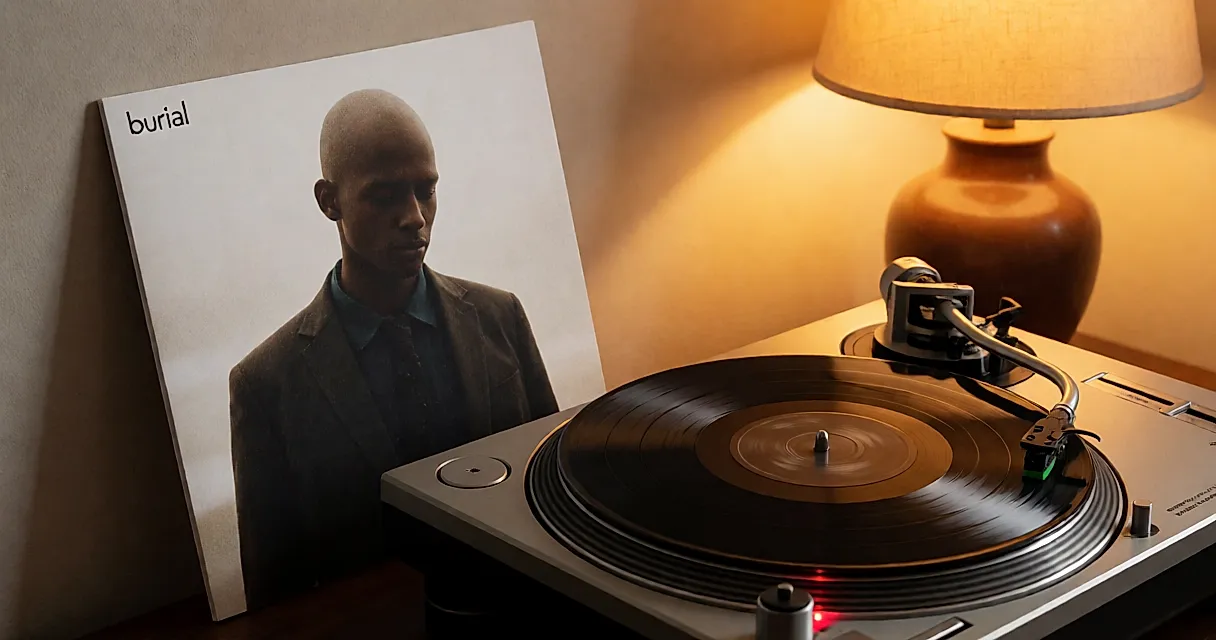
A voice rises, pitched up, looped around a few syllables you cannot make out. Behind it: vinyl crackle, fine rain, a finger click that lands before the bass. ‘Archangel’ opens Untrue, and the track sums up the paradox well — dubstep did not just invent a way of making a dancefloor shake; it also learned how to sustain an album.
When the 12-inch ruled
In the early 2000s, in south London, this music was made one record at a time. The tempo sits around 140 BPM, but the drums hit offbeat, in half-time, leaving room for the sub. An A-side, a B-side, a short pressing run, sometimes a white label: the 12-inch was the natural format for a genre that only fully exists on a big soundsystem. The seal of approval did not come from a headphone listen but from the DJ dropping the dubplate at the right moment, in the right room — the FWD>> nights, the racks at Big Apple in Croydon, the whole circuit where people came to hear what had not yet been pressed.
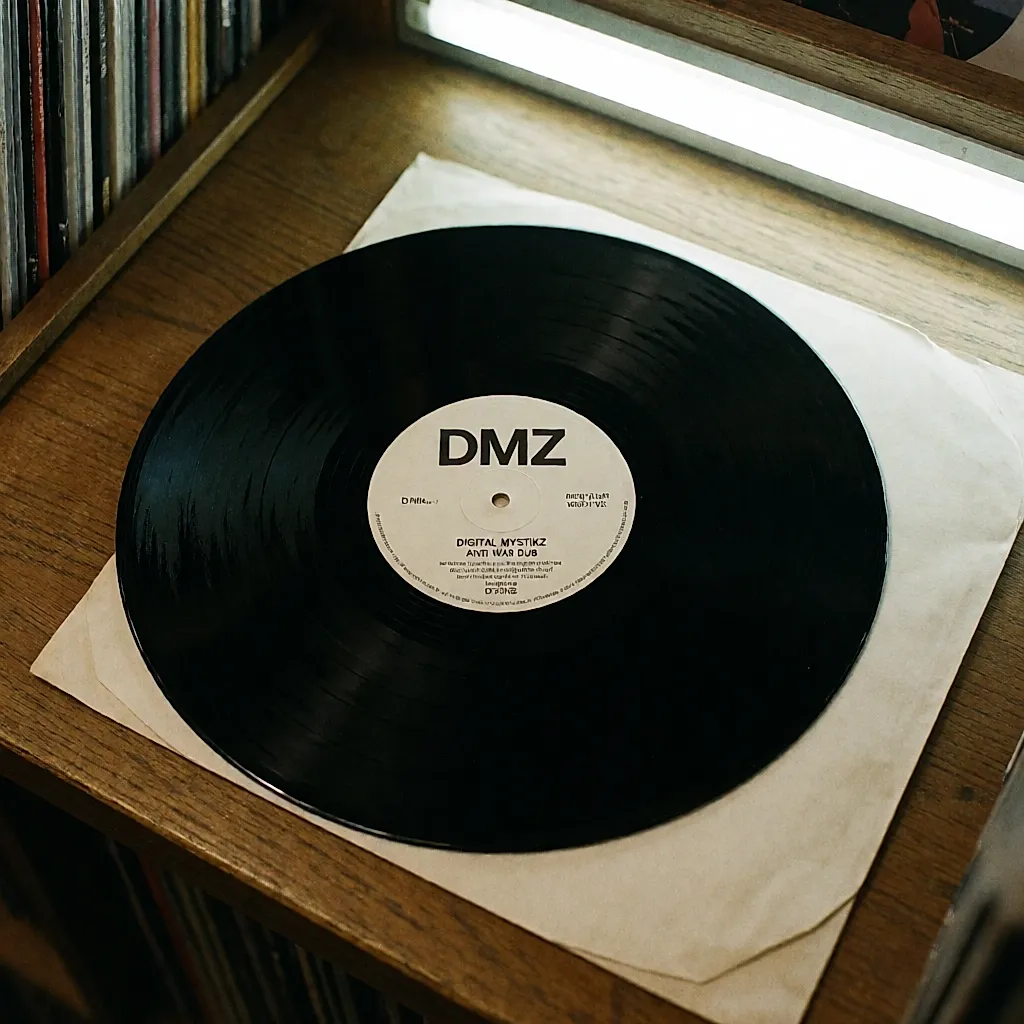
That economy has its virtues. Nothing is decorative: every element has to carry, and a track that cannot hold up in 30 seconds does not make the cut. It also has a limit, and a big one. When everything is judged on impact, nobody has a reason to write an intro, an interlude, or a track that ends badly. The drop becomes a tool, not an idea. In that logic, the album has no business being there at all. And yet that is exactly what the scene ended up producing: why did a culture so radically turned towards the dancefloor start thinking in records?
Three albums that left the white label behind
Three albums changed the terms: Skream!, Burial's Untrue and Benga's Diary of an Afro Warrior. They proved that a bass scene could produce records, not just fearsome A-sides. The move was not only artistic but economic — you were no longer selling a track but an object, with its sleeve, its sequence and two sides to turn over.

Above all, the album allowed what the 12-inch forbade. Short tracks. Tracks that will never work on a soundsystem but stand up on their own. Silences, false starts, a breath between two assaults. A producer moving to the long format does not change profession: they change scale. They accept being listened to at home, on headphones, at a volume that does not do justice to the sub — and that this is precisely where the record reveals itself.
What Burial put into Untrue
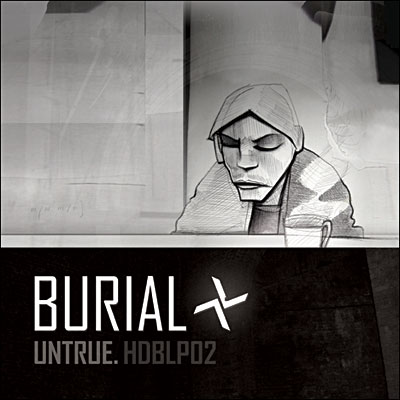
Burial's Untrue is a textbook case. The raw material is vocal: stretched voices, transposed, cut into loops that never resolve their phrase. Vinyl crackle is everywhere, so is rain, and the drums inherit directly from 2-step garage — syncopation, gaps, a kick that never lands where the bar promises.
The result does not sound like a night in a club. It sounds like what remains of one: a speaker guessed at from the street, a memory of melody, a breath. That is what the album format gave dubstep — the chance to be music of atmosphere as much as pressure. And proof, for any bass producer who is curious, that a record can stand without a single memorable drop.
Credits, formats and editions
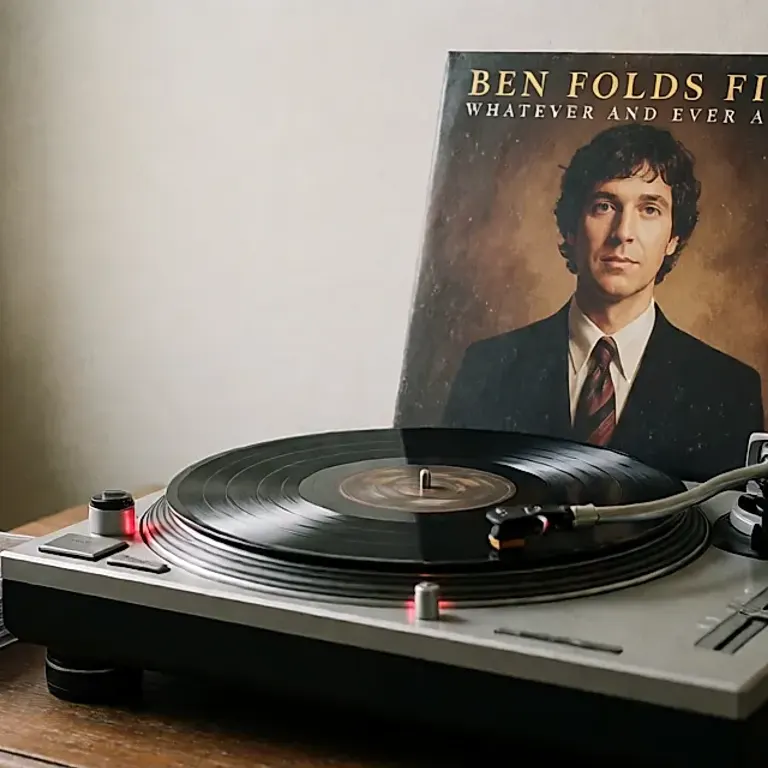
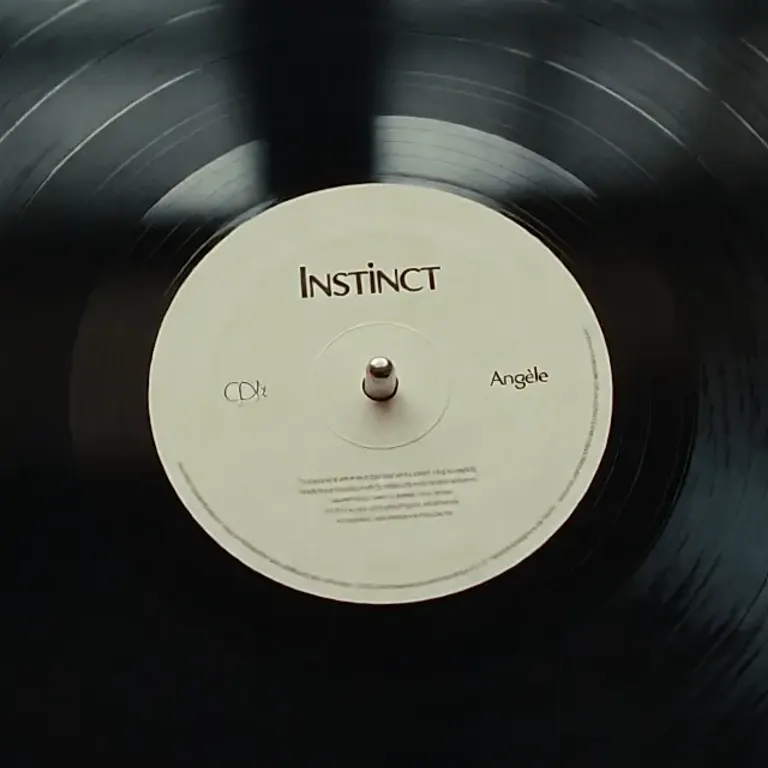
A dubstep album is not judged by ear alone. It is also read on the sleeve and the record label: producer, label, mastering, pressing, year of release. Those credits are not decorative. They tell you who shaped the sound, which circuit the record moved through, and whether you are holding a first edition, a reissue or a compilation. With a foundational record, be wary of versions with no matrix number or credits: they may be truncated, or simply badly documented.
Formats tell different stories. Vinyl imposes its sides and constraints; CD can carry a continuous listen; digital makes the record available everywhere, but often without the booklet or full credits. A coloured pressing, an import or a limited edition changes the price, not necessarily the music. That is why it is better to check the official label or artist page before buying, rather than trusting a reproduced sleeve with no details.
The lesson travelled
It passed to the next generation, the one that never knew white labels. Bicep, the Belfast duo based in London, also circulated edits and B-sides through their Feel My Bicep blog. Their albums Bicep and Isles show the same reflex — the sample, the voice, club material stretched without rushing it. Joy Orbison with still slipping vol. 1, Overmono with Good Lies: the same tools, the same desire to hold an hour without ever giving in to showmanship.
Should we conclude that dubstep is coming back? Not in the sense of a fashion revival, with its saturated bass and grey sleeves. What is returning is a habit of making records: thinking in sequences rather than ammunition. The genre itself never really left the British landscape; it melted into current production, to the point that its name circulates less than its effects. The album door has this practical advantage: it makes the sound identifiable again — and therefore open to argument.
A listening route
Three steps are enough to take the discovery further. First Untrue, in order, one side at a time: let the short tracks and cut-up voices do their work. Then Skream!, to hear what an album adds to the energy of a 12-inch — order, sleeve, tracks that do not aim at the dancefloor. Then still slipping vol. 1 or Good Lies, to see how the lesson of sampling and voice travelled to other bass producers.
To get into Untrue, do not look for the loudest track: take the record in order, one side at a time, and let the short tracks do their work. Then go back to Skream! and ask what the long format really added. The right question is not 'does it work in a club?' but 'what does it say about the duration of a record?'.
Listening
For the albums mentioned, check which editions are available: vinyl, CD or digital depending on the case. For Untrue, be wary of reuploads: go to the official label or artist page. On budget, stay with rough figures: expect around £25–£35 for a new double vinyl, £10–£15 for a CD, and less still second-hand at Rough Trade or another independent record shop. Coloured pressings, imports and sleeve condition quickly change the price; a standard black vinyl is almost always the cheapest version.
Credits
Credits for Untrue — Burial (2007):
- Performance : Burial
- Production : Burial
Source: MusicBrainz — consulted on 2026-10-22.



Comments
Your opinion matters: rate the article, react and reply to comments.
Comments are moderated; AI-assisted comments are flagged. Text emoticons (8-), :-), <3…) are automatically shown as images.