Read the credits on three Faroese records: the same names keep turning up, from doom metal to ballads sung in Faroese. The pool is small enough that a metal band's guitarist can bump into a pop singer in the same rehearsal room. At this scale, the absence of a metropolis or a domestic market does not condemn the scene. It forces an economy of means that ends up being audible on the records. And when one of its own leaves to play elsewhere, they take that economy with them.
One label, one distributor, a handful of addresses
In Tórshavn, the question isn't 'which label?' but 'what is Tutl putting out this season?' The capital's label-distributor does the work of three separate operations elsewhere: record company, wholesaler and export office. For a Faroese band, a place on the catalogue means existing physically — in the town's record racks, in parcels heading for Denmark, in orders from the few shops that follow the islands.
The rest of the infrastructure fits into a few addresses. The Nordic House in Tórshavn programmes a good share of the year's concerts. In summer, G! Festival sets up its stages and brings in international acts. Add the Summartónar festival and the public broadcaster Kringvarp Føroya, and that is about the full circuit of places where an artist can exist in public.
The same hands across genres
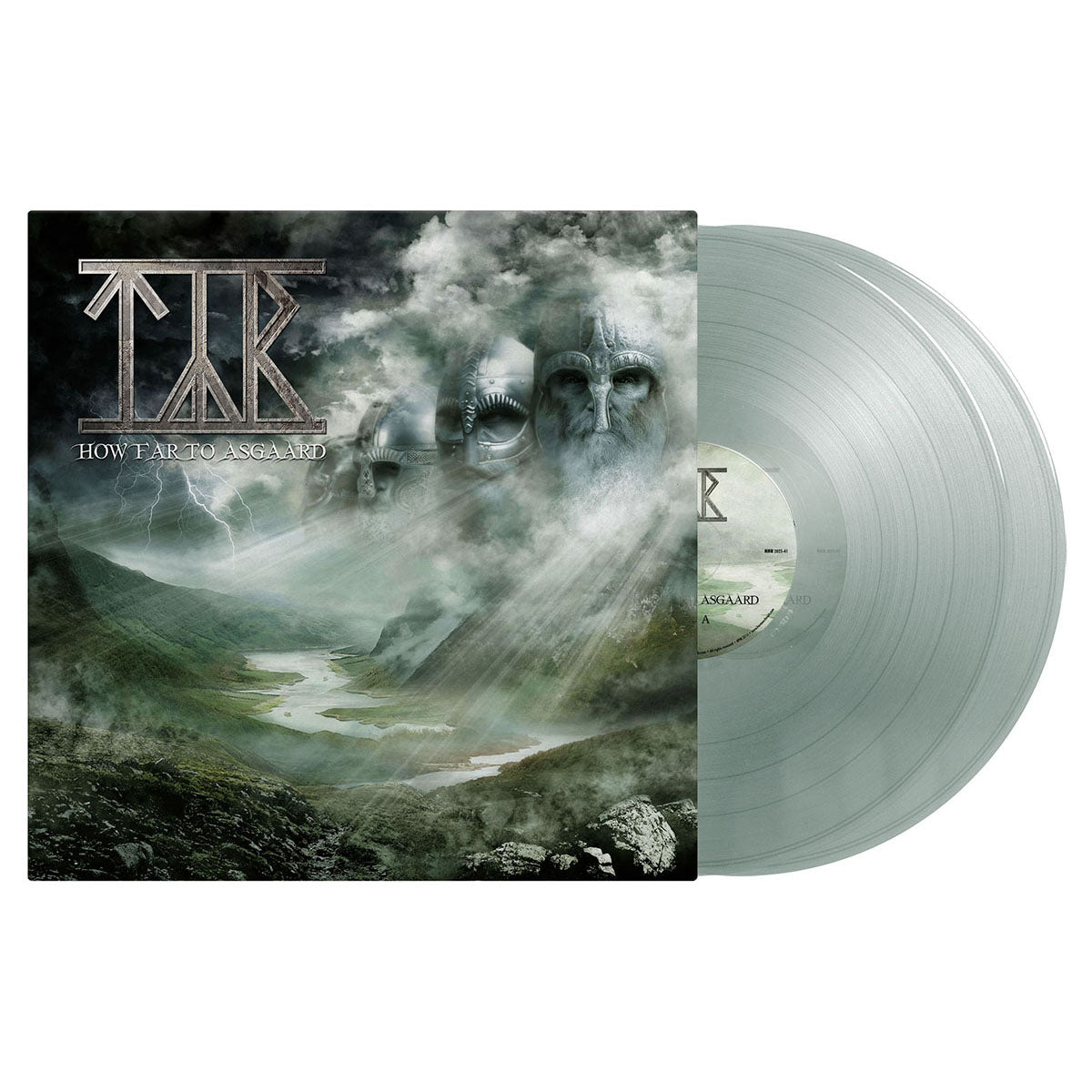
This is the most visible consequence of scale: genres do not have separate ecosystems. Týr draw on traditional ballads; Hamferð play slow, heavy music; Eivør Pálsdóttir moves between English and Faroese without it amounting to a career switch; Teitur Lassen writes in English and also records in the islands' language. Four worlds that on paper have no business together, yet they move through the same small milieu.
There are also those who leave. Janus Rasmussen, who came through the electro duo Byrta, still packs a lot into very little material. This movement is nothing new. Back then, nobody said 'network'; they said 'the boat', then 'the Copenhagen flight'. Faroese musicians have always known they would have to leave to make a living from music — and come back to record.
What constraint does to the sound
Here it is worth being honest about what can be claimed. That a tiny scene produces sparser arrangements is not a law: Faroese bands can sound as dense and as loud as their Danish neighbours. But when an artist has to be able to play alone, take two instruments on a plane and win over a room that knows neither their language nor their name, certain solutions recur more than others: voice forward, loops, harmonies, deliberate spareness.
Language plays its part, though it cannot be singled out as the sole cause. Faroese is the language of kvæði, the long ballads sung in a chain, unaccompanied, at celebrations — including Ólavsøka, the Faroes' national holiday, celebrated in Tórshavn, when the town fills up and the dancing resumes in the halls. No one claims that Faroese pop descends in a straight line from those rounds. But the lineage is documented for several artists: carrying a voice without a microphone in a room where people join in is a skill acquired very early.
Three reference points before you enter the Faroese scene. Faroese is a North Germanic language, close to Icelandic. Kvæði is a repertoire of chain-sung ballads, unaccompanied, still practised. Ólavsøka is the Faroes' national holiday, celebrated in Tórshavn: the town sings and dances more than it sleeps.
Eivør, the exporter
Eivør Pálsdóttir has built, album by album, a body of work that resembles no national scene — because there is no national scene for it to resemble. Slør and Segl travel well beyond the archipelago.
Her career is also a matter of decisions. Singing in Faroese when English would open more doors. Performing alone with a loop pedal, which can hold an hour with two instruments and a voice — the exact solution forced by an archipelago where no one brings in an orchestra for every concert. When she tours with bigger resources, the spine remains the same: voice first, everything else after.
Listening
Eivør's albums are available to stream on the usual platforms — Spotify, Deezer, Qobuz, YouTube — with availability varying by country and rights holder: check before you press play. For the rest of the scene, the Tutl catalogue remains a reliable first stop, ahead of independent record shops that order direct and Danish second-hand dealers.
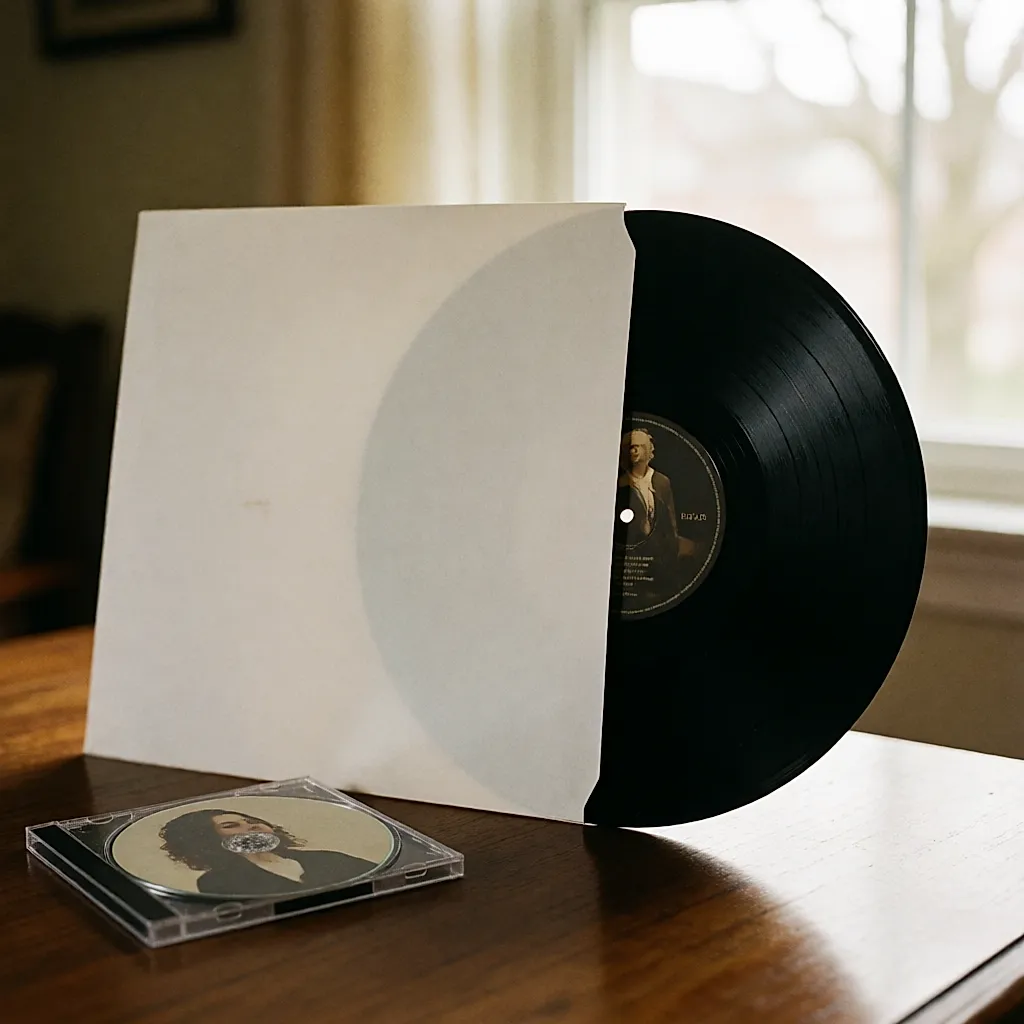
On price, expect roughly £21–£30 for a new vinyl and £13–£17 for a CD; these ranges shift with the pressing, the import and the condition of a second-hand copy. And if you want to grasp the scene in one go rather than record by record, G! Festival remains a concentrated introduction.
Credits
Credits for Slør — Eivør (2015):
- Instruments : Mikael Blak (guitar) ; Mikael Blak (keyboard) ; Mikael Blak (vocoder) ; Mikael Blak (bass) ; Tróndur Bogason (piano) ; Tróndur Bogason (keyboard) ; Eivør (membranophone) ; Eivør (guitar) …
- Vocals : Eivør ; Høgni Lisberg (background vocals)
- Production : Mikael Blak (additional) ; Tróndur Bogason ; Eivør (additional) ; Hallur Johnsson ; Høgni Lisberg (additional)
- Arrangements : Tróndur Bogason
- Mixing : Addi 800 ; Hallur Johnsson
- Mastering : Glenn Schick
- Programming : Hallur Johnsson
Source: MusicBrainz — consulted on 2026-10-22.
Sources
- Tutl — the Faroese label and distributor's site, accessed 21 October 2026.
- Eivør Pálsdóttir — official site, accessed 21 October 2026.

Comments
Your opinion matters: rate the article, react and reply to comments.
Comments are moderated; AI-assisted comments are flagged. Text emoticons (8-), :-), <3…) are automatically shown as images.