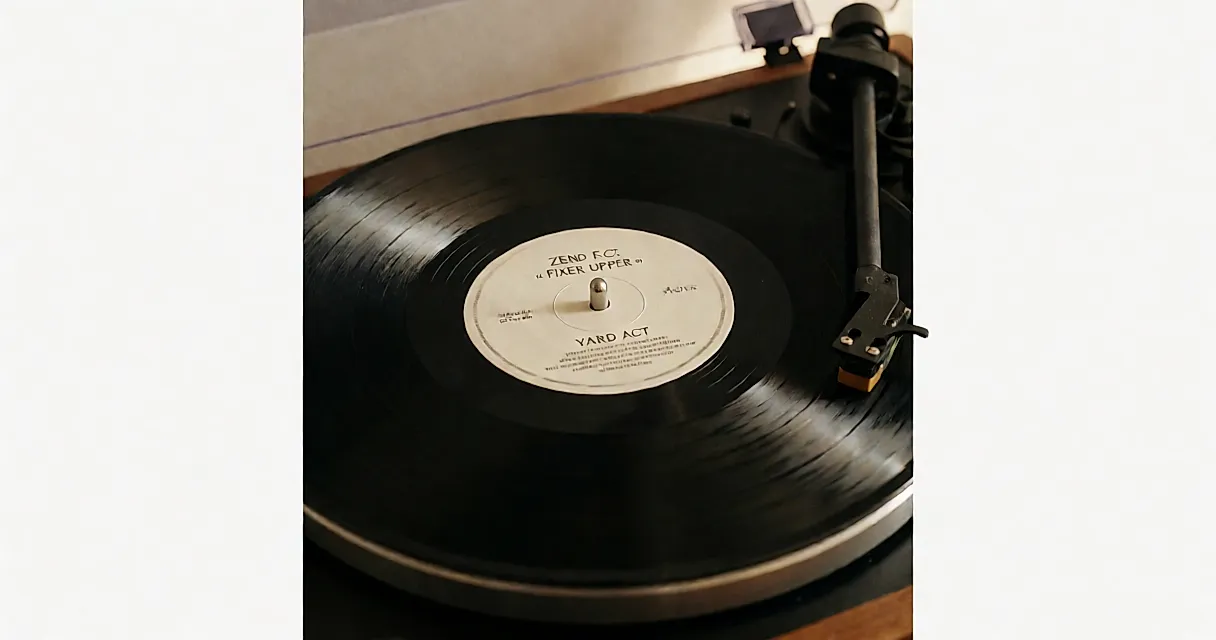
One of Yard Act's first singles, 'Fixer Upper', came out on Zen F.C. before the band signed to Island. Which leaves a question that has hung around since 2019: what can the way Yard Act write tell us about a country that has largely stopped listening to anyone?
Leeds, without a flag
Yard Act formed in Leeds in 2019, inside a network of small rooms and labels kept going by hand. The first singles, 'The Trapper's Pelts' and 'Fixer Upper', appeared on Zen F.C., an independent label from the city, before the group signed to Island. That detail isn't decorative: it says where the band came from and what budget they were working with at the start. A local scene, a record shop, a club — the Brudenell Social Club is still the rallying point for all of it — and songs written to be understood at the back of a room with no PA.
Scaling up changes the terms without erasing the origin. Signing to a British major means studios, promotion, festival slots; it also means meeting a demand — for a 'political band', a category the English music market has known how to sell since 2019. Yard Act have never claimed the role. James Smith writes monologues. That is something else, and something more interesting.
The character, not the slogan
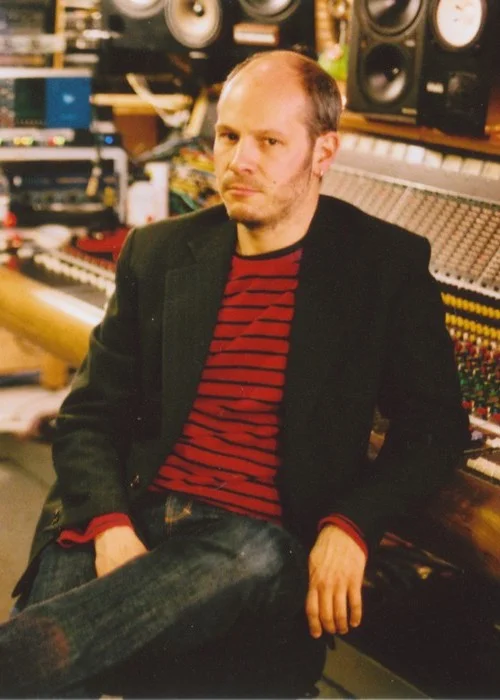
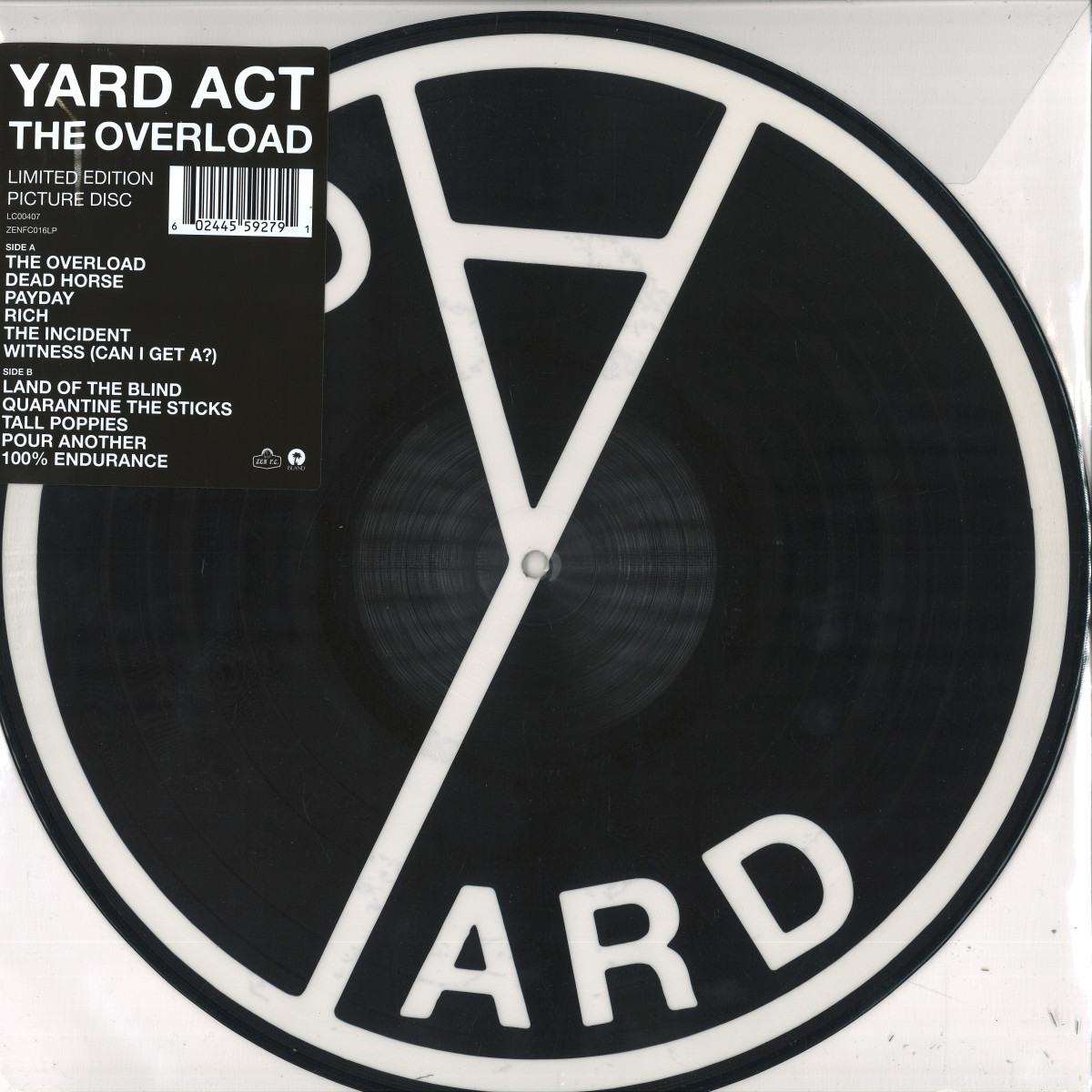
The Overload, released in January 2022 and produced by Ali Chant, lines those monologues up as a run of period portraits: 'Fixer Upper', the employee waiting for payday; the one getting through 'Dark Days' with their teeth gritted. The record made the shortlist for the Mercury Prize 2022, which that year went to Little Simz for Sometimes I Might Be Introvert. It isn't a political prize; it's a sign that critics heard something other than another revival.
The comparison with the neighbours is illuminating. Idles sings in the first person and addresses you; Sleaford Mods bark; Fontaines D.C., out of Dublin, build poems. Yard Act manufacture composite voices: a character, a delivery, a class accent. The technique sits closer to the British character song — Ray Davies, Madness — than to the punk manifesto.
Except that by speaking through characters all the time, you eventually lose track of where the band is. Irony is solid shelter: it protects you from naivety, and it protects you from commitment too. Once everyone has got the joke, satire has gained an audience and lost a target.
What the noise does to the voice
It's worth measuring the volume of noise around them. Between 2019 and 2022 the British post-punk wave took the covers, the end-of-year polls and the big festival bills: Idles, Shame, Black Country, New Road, Squid, Dry Cleaning, Yard Act. That's a lot of bands for one lane, and the lane shut as fast as it opened. A group arriving after the wave inherits a misunderstanding: it gets asked for a position when what it offers is a way of writing.
The context hasn't emptied out either. Cost-of-living crisis, small venues closing, tours priced out of reach: the politics is in the budgets too, not only in the lyrics. On the live side, summer 2024 gave a clear example when tickets for the Oasis reunion went on sale and the row over dynamic pricing followed — a file the UK authorities have taken up. Rock turns up there as a heritage product sold to the highest bidder. In that setting it's hard to make anything heard except a comment on the price of a ticket.
No utopia in sight
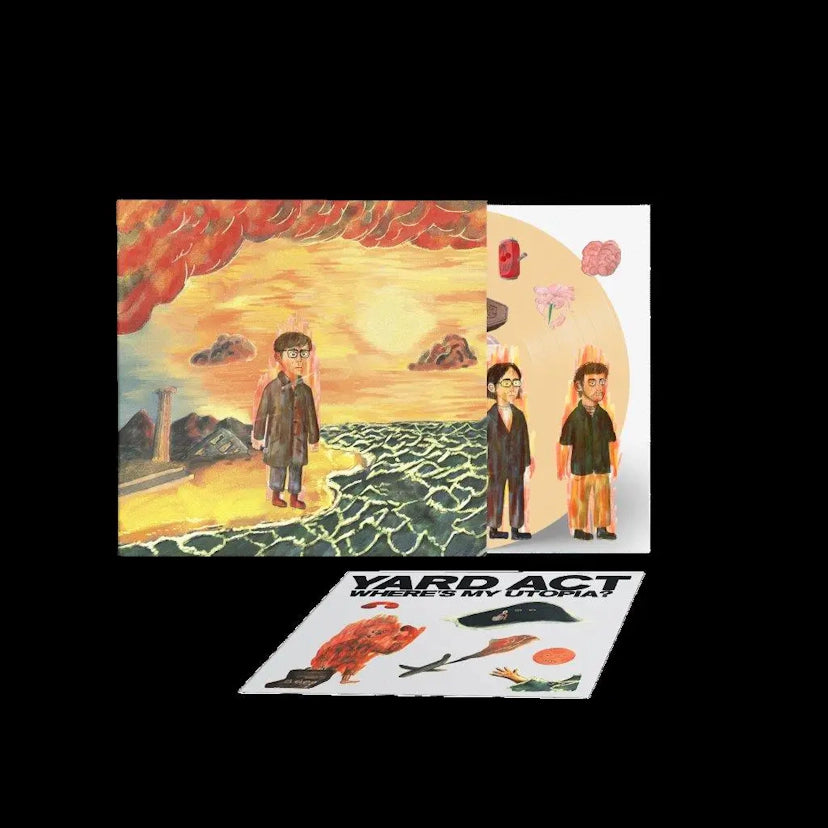
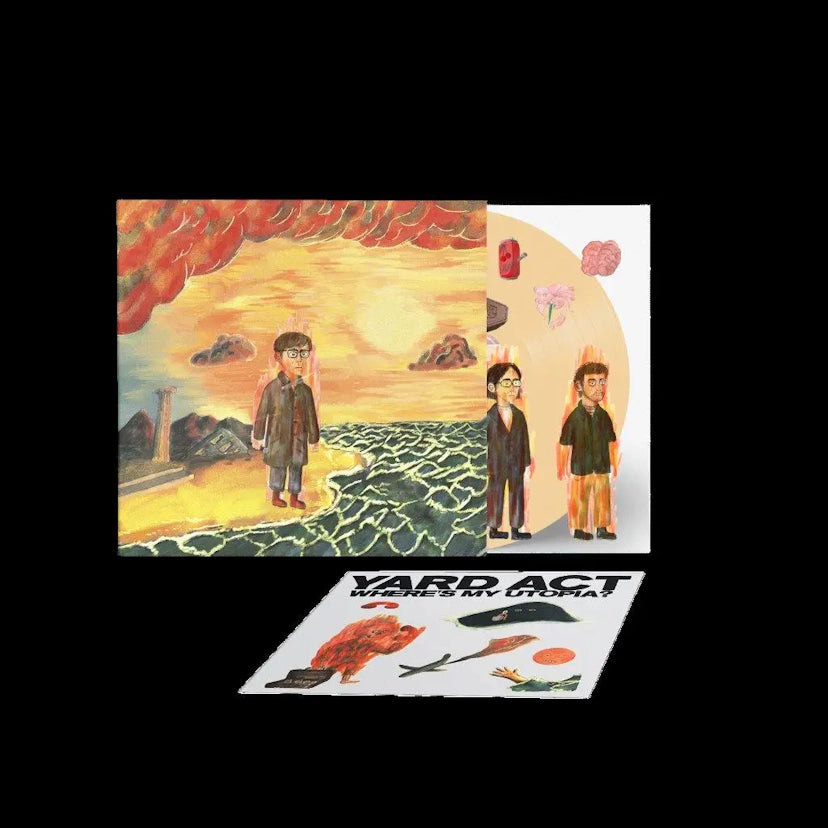
Two years on, Where's My Utopia? (1 March 2024) moves the question. The record is co-produced by Remi Kabaka Jr., a Gorillaz collaborator, and by James Smith himself. Here the band looks less at the country than at what it took to get there: success, the guilt that comes with it, the feeling of having asked for something without knowing what. 'Dream Job', 'We Make Hits' and 'Petroleum' all circle that vertigo.
A decade of saturation has made the political posture expensive and the promise suspect. What's left is the only thing a band can genuinely deliver: a way of looking, a lexicon, a way of giving voice to people nobody hears.
The utopia of the title stays an open question, and long may it stay open. Bands that close it too early end up as slogans.
Build notes. The Overload (Island, January 2022): produced by Ali Chant, Mercury Prize 2022 shortlist. Where's My Utopia? (Island, 1 March 2024): co-produced by Remi Kabaka Jr. and James Smith. The studio details aren't established here; those two credits are already enough to measure the change of scale between the two records.
Where to listen
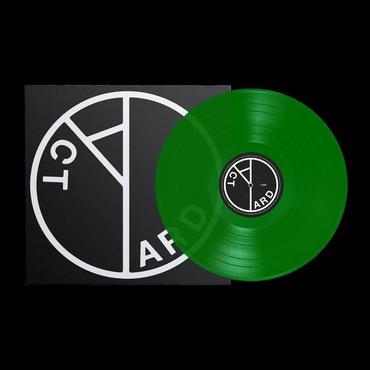
Both albums are streaming on the usual services (Spotify, Deezer, Qobuz, YouTube) and on vinyl through Island; Rough Trade and the independents stock them. Expect to pay around £22–26 for a standard new pressing; the price climbs with coloured editions, imports and limited runs, and drops sharply secondhand. The early Zen F.C. singles mostly turn up secondhand, so check the label on the back sleeve before you buy.
Take them in order: The Overload first, for the characters and the Leeds setting; Where's My Utopia? afterwards, for what survives once success has been through the room.
Credits
Credits for The Overload — Yard Act (2021):
- Instruments : Ali Chant (shakers) ; Ryan Needham (bass guitar) ; Sam Shipstone (guitar) ; James Smith (congas) ; James Smith (drums (drum set)) ; James Smith (synthesizer) ; James Smith (tambourine)
- Vocals : Ryan Needham (background vocals) ; Sam Shipstone (background vocals) ; James Smith (background vocals) ; James Smith
- Production : Ali Chant
- Mixing : Ali Chant
- Programming : James Smith (drum machine)
Source: MusicBrainz — consulted on 2026-10-22.
Comments
Your opinion matters: rate the article, react and reply to comments.
Comments are moderated; AI-assisted comments are flagged. Text emoticons (8-), :-), <3…) are automatically shown as images.